About
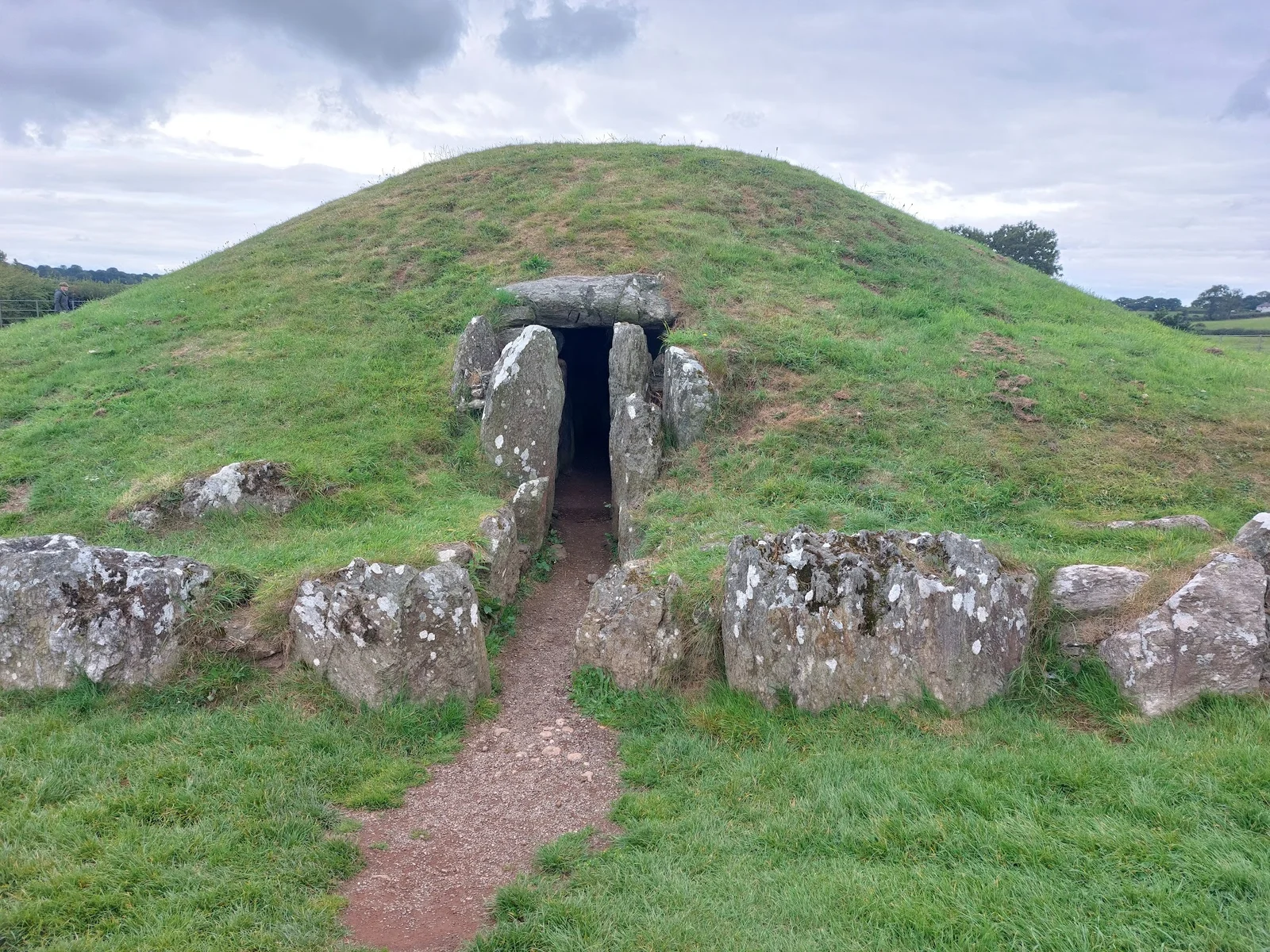
Dating to around 2500 BC, the Lligwy Burial Chamber's capstone — a single limestone slab measuring roughly 5.5 by 4.6 metres and estimated to weigh 25 tonnes — is one of the largest and most imposing megalithic covers in Wales, perched above a shallow pit supported by upright stones in open farmland above the east Anglesey coast. Excavations in 1909 found the remains of at least 15 individuals inside, along with Romano-British pottery suggesting the chamber was still in use — or reused — centuries after its construction, a reminder that these structures served living communities across vast timescales. Access is free year-round via a short footpath from the lay-by on the lane between Moelfre and Brynrefail; it pairs naturally with Din Lligwy Iron Age village 750 metres north and Lligwy Beach a similar distance east for a satisfying half-morning on the Anglesey coast.
Suitable for
Accessibility
Getting there & parking
Frequently asked questions
How big is the capstone really?
The capstone is approximately 5.5 metres by 4.6 metres — roughly the floor area of a large living room — and is estimated to weigh around 25 tonnes. It was quarried from local limestone and moved into position without metal tools or wheeled transport.
What was found inside?
Excavations in 1909 uncovered the remains of between 15 and 30 individuals, animal bones, and Romano-British pottery. The presence of later Roman-era material suggests the site was revisited and possibly reused for burial over a period of thousands of years.
Can I combine it with Din Lligwy?
Yes — Din Lligwy Iron Age village is about 750 metres north along the lane, and Lligwy Beach is a similar distance east. Together they make one of the best heritage and coast combinations on the island.
Tagged