About
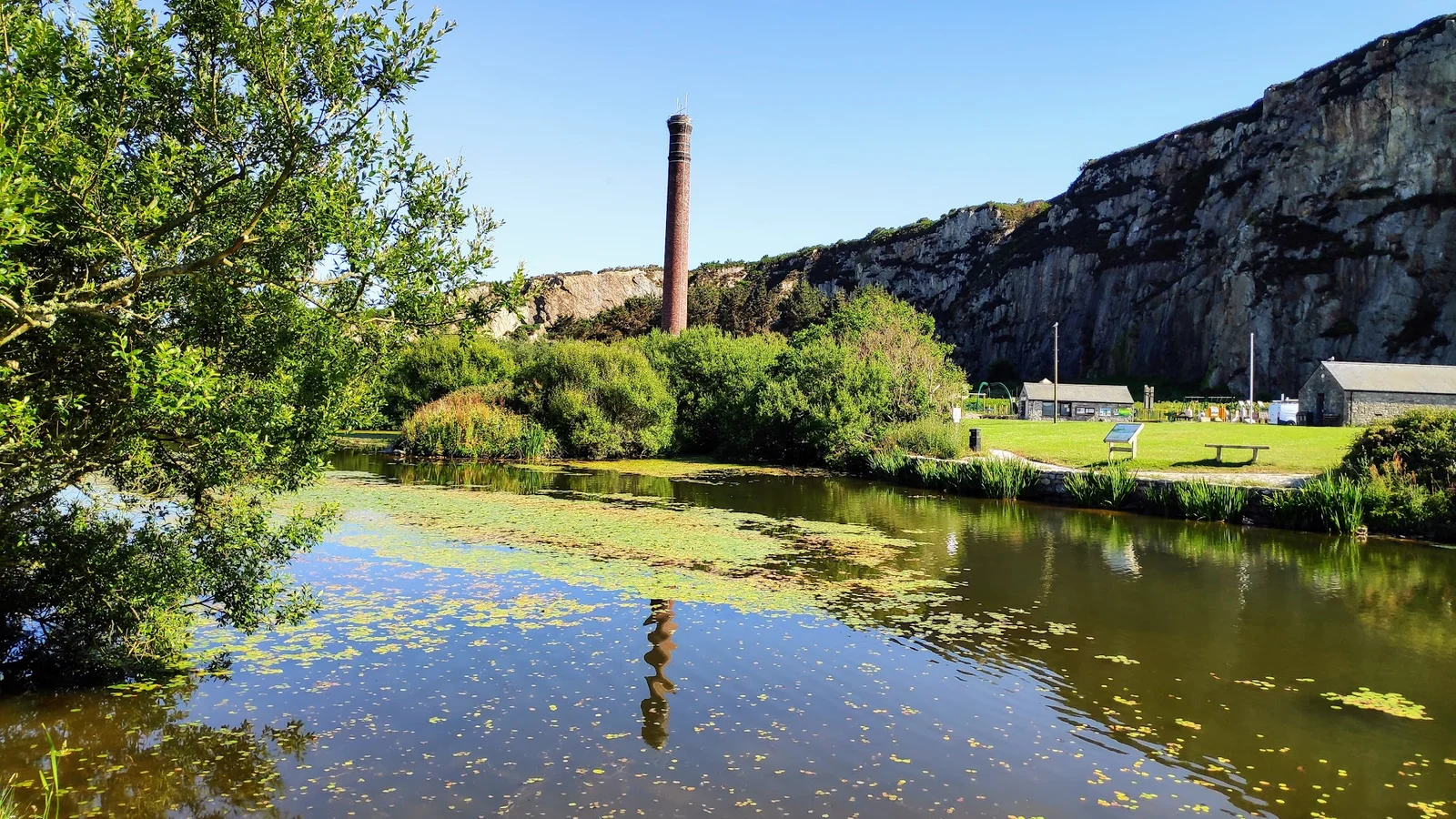
The summit plateau of Parys Mountain (146 metres) above Amlwch presents a landscape so extraordinary it was used as a stand-in for Mars in early film productions — a post-industrial moonscape of ochre, rust-red, violet and acid-green spoil heaps pocked with mineral-stained pools, the skeletal remains of an 18th-century windmill, and the sheer walls of the Great Opencast, an excavation so vast it is visible from the main road miles away. At its peak in the 1780s Parys Mountain was the world's largest copper mine, producing enough metal to sheathe the hulls of the Royal Navy's entire fleet and temporarily crashing the global copper price; the scale of the workings — still scarred into the hillside 200 years after closure — makes the industrial ambition of the period viscerally real. A 2-mile waymarked trail from the car park on the B5111 leads around the main extraction zone with interpretation boards throughout; wear sturdy footwear as the ground is rough and the spoil heaps unstable at their edges.
Suitable for
Accessibility
Getting there & parking
Frequently asked questions
Is it safe to walk on the spoil heaps?
The waymarked trail is safe to follow. Do not stray to the edges of the Great Opencast or climb the spoil heaps off the path — the ground is unstable in places and the acidic drainage pools should be treated with caution.
Why are the rocks so colourful?
The vivid ochres, purples and greens come from copper, iron and sulphur minerals oxidising in the exposed rock faces. The acidic run-off stains the pools a vivid turquoise — striking to look at but toxic to most wildlife.
Is Parys Mountain close to Amlwch?
Yes — the mountain is immediately south of Amlwch town and a 5-minute drive from the centre. Combine it with a visit to Amlwch Port, which was once one of the busiest copper-exporting harbours in the world.
Tagged